

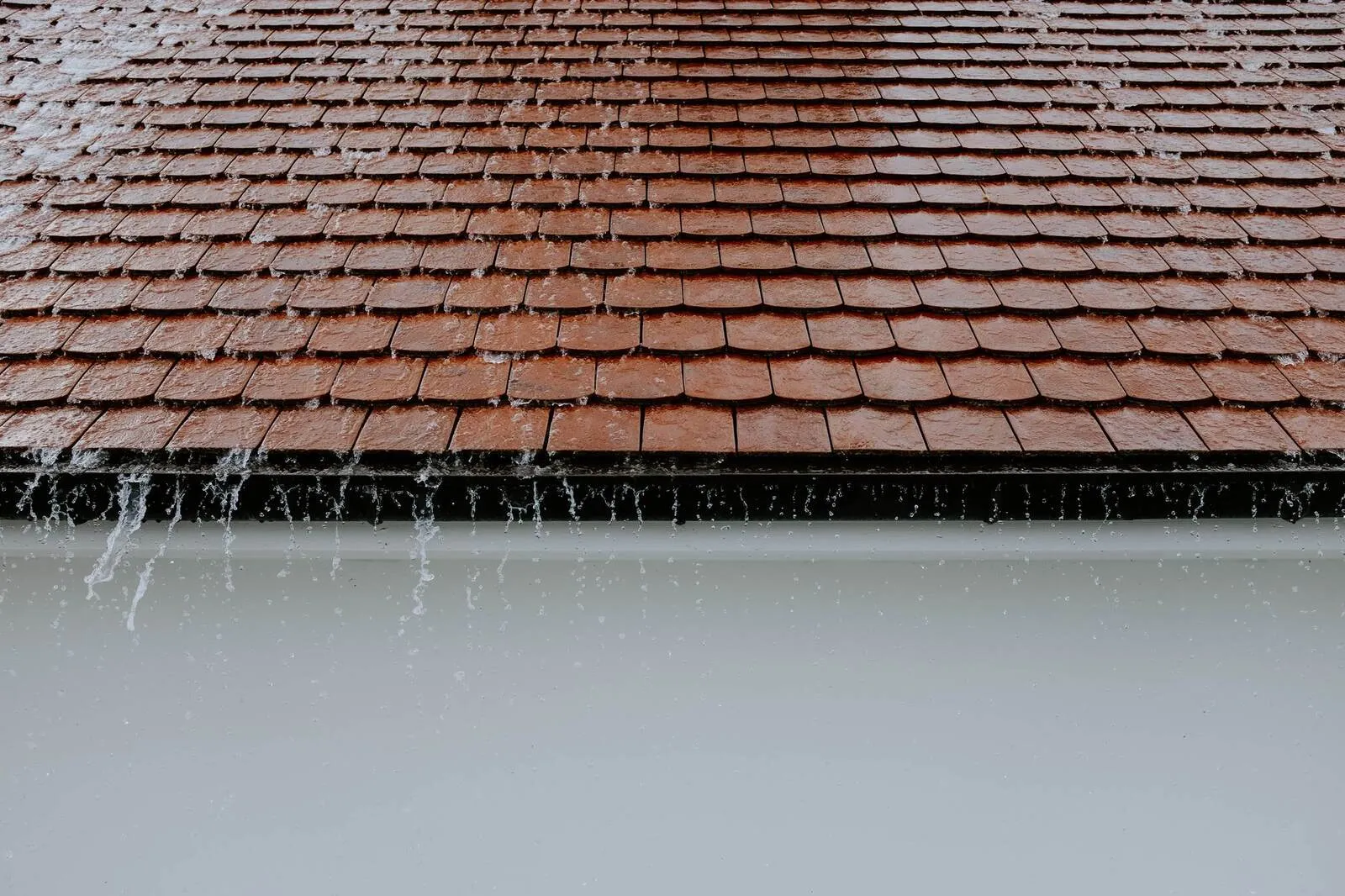
A ceiling stain that appears during a downpour is stressful. You hear the drip, you see the spot spreading, and you wonder what you’re supposed to do right now. If your roof is leaking in heavy rain, the first hour matters, and almost all of it happens inside the house or on the ground.
This guide walks through that first hour and the day after. It is meant to get you from the first drip to a roofer’s visit with the water contained, the damage documented, and nobody hurt.
What Should You Do When Your Roof Is Leaking in Heavy Rain?
Do five things, in this order. First, stay off the roof. Second, keep people and valuables away from the water. Third, catch what is dripping. Fourth, take photos and notes while the leak is active. Fifth, call a roofer and say exactly what you saw.
None of those steps need a ladder. That is on purpose. The leak will still be there when the roofer arrives, but a fall will not be something you can undo.
Why You Should Never Climb Onto a Wet Roof
It is tempting to grab a ladder and a tarp, especially at night. Please don’t. Wet shingles are slick, rain cuts your visibility, and wind can catch a loose tarp and pull you with it. A Clark County storm is the worst time to be on a roof, even for someone who is comfortable with heights.
The same goes for reaching out of an upper window or leaning a ladder against a wet gutter. You can still help your roofer a lot from the ground. Stand back and photograph the roofline, the valleys, and the area above the stain. A phone camera with a zoom is enough, and those pictures will tell the crew where to look first.
Protect the Inside of the House First
Water follows gravity, so think about where it is going next. Move furniture, rugs, and electronics out of the path. Put a bucket or a large pot under the drip, and lay a towel in the bottom so the splashing doesn’t spread the mess.
If the ceiling is bulging or sagging, keep people out from under it. Trapped water is heavy, and a swollen section of drywall can let go all at once. If you can safely reach it from the side, a small hole lets the water drain into a bucket in a controlled way.
Treat anything electrical with care. If water is dripping through a light fixture, a ceiling fan, or near an outlet, stay clear and turn off that circuit at the breaker if you can reach the panel without stepping through water. Call an electrician if the fixture got wet.
Document the Leak While It Is Happening
Take photos of the stain, the drip, and any wet insulation or drywall. Add a wide shot of the room, so the roofer can see how the stain sits in the house. Write down the date, the time, and how hard it was raining. Note which direction the wind was blowing from, because wind-driven rain finds different gaps than rain falling straight down.
These notes help the roofer, and they help with an insurance claim.
The Washington State Office of the Insurance Commissioner explains in its guide to leaks, water damage, and mold that policies usually cover sudden leaks but may not cover gradual ones. It also says that after a storm or accident damages your roof, you need to fix the damage quickly to stop more water from entering, and that insurance won’t cover water damage if you delay repairs.
Our guide to storm damage roof repair in Clark County covers the documentation and claim steps in more detail. If your leak is on an older roof, whether insurance covers a roof replacement is a separate question worth reading before you call anyone.
Why the Drip Is Often Not Under the Leak
Water that enters at one spot on the roof can travel along the underlayment, a rafter, or the underside of the decking before it drips through the ceiling somewhere else. The stain in your living room might sit several feet downhill from where the water got in.
That is why a roofer traces a leak back to its source instead of patching the wet spot.
When we look at a leak, we crawl the attic and follow the water back instead of treating the stain. If you have safe attic access, a flashlight check from the hatch can help. Look for dark streaks on the wood, damp insulation, or daylight where there shouldn’t be any. Only step on the framing, never on the drywall between the joists, and stay out if the space is wet or the lighting is poor.
Where Roofs Usually Leak in Heavy Rain
Some roofs fail in the middle of a shingle field, but most heavy-rain leaks start where the roof is interrupted. That means chimneys, walls that meet the roof, valleys, vent pipes, and skylights. Our guide on where roof leaks actually start at the flashing explains why. If the stain is near a skylight, read why skylights leak in the Pacific Northwest before you assume the roof is the problem.
Gutters can look like a roof leak, too. When a gutter overflows during a downpour, water can run behind it and show up inside along an exterior wall. We cover that in gutters overflowing or leaking behind the fascia.
Where you live also matters. Homes under heavy fir canopy in Felida collect needles and debris in valleys, which can push water sideways. Homes in Camas and the Gorge corridor take wind-driven rain that finds gaps a normal storm doesn’t.
How Does an Emergency Roof Tarp Work?
A tarp is a temporary cover, not a repair. It keeps rain out of an opening until a roofer can fix the actual problem. A tarp that is secured well can protect the house through a storm. A tarp that is loose becomes a sail.
That is why we ask homeowners not to install one themselves. A tarp has to be anchored to solid roofing so wind can’t lift it, and it has to shed water instead of channeling it into a new spot. The work happens on a wet, slick roof, and it is the exact situation we warned about earlier.
If you need one, ask. Quality Master offers tarp service on roofing projects while a claim or financing is being worked out, so mention it on the first call.
What to Tell the Roofer When You Call
A good description saves time. Have these answers ready:
- Where the water is coming in, and which room it is in
- When it started and whether it only happens in hard rain or with wind
- Whether it is a new leak or something you have seen before
- Whether the roof has skylights, a chimney, or recent repairs near the stain
- The age of the roof, if you know it
- Photos from inside and from the ground
Those details let the crew plan the inspection before they arrive. They also show whether you need a targeted repair or a broader look at the roof.
What Happens After the Rain Stops
Once the storm passes, the real work begins. A roofer inspects the roof and the attic, finds where the water got in, and recommends what to do. Our inspections are free, drone-documented, and followed by a written estimate. We tell you when a repair is enough and when it is not.
If you would like us to look at a leak, our roof leak repair in Vancouver, WA page explains how we diagnose and repair them. You can also contact Quality Master Roofing & Remodel with your photos and notes, and we’ll tell you what to do next.
Is a Roof Leak an Emergency?
Treat it as urgent, even if the drip is slow. Water keeps working into insulation, drywall, and framing the longer it is left alone. A small leak you ignore through a wet season can turn into a rotted section or a mold problem. Contain the water, document it, and book the inspection quickly.
Can I Fix a Roof Leak Myself?
You can handle the inside of the house, like moving belongings, catching water, and taking photos. The roof itself is a job for a roofer. Sealant on a wet roof rarely holds, and a patch can hide the real source while the leak spreads. The safe move is to leave the roof alone and give the roofer clear information.