

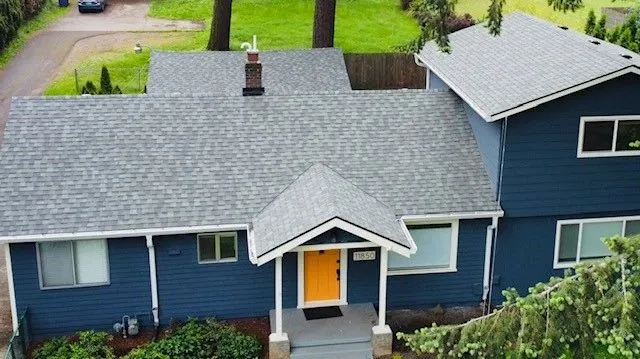
A fall roof check starts with a walk around the house, not a ladder. You are looking for changes worth showing a roofer: a missing patch of shingles, debris collecting in a valley, a gutter pulling away, or a ceiling stain that has returned.
For Clark County homeowners, September is a useful point to organize those observations and arrange roofing inspection or repair before a known problem becomes urgent. A seasonal check does not mean every roof needs replacement. It should produce a clearer understanding of the roof you have.
Walk the perimeter and take useful photos
Choose a dry day and stay on stable ground. Photograph each visible roof plane, then take closer images of anything that looks different. Include enough of the house in each image that a roofer can identify the location. A close-up without context can be difficult to place.
GAF’s guide to inspecting a roof from the ground recommends a regular visual check and identifies debris-filled gutters as an obstacle to drainage. Treat that walk as a screening step. It cannot reveal every flashing detail or the condition beneath the roof covering.
Look toward valleys, the edges around chimneys and skylights, and the connection between the roof and gutters. Do not step onto a wet roof to see a hidden section. Tell the contractor which portions you could not see so those areas are part of the assessment.
Match outside observations with inside history
Write down any ceiling stains, drips, peeling finishes, or changes around a skylight. Record which room, when you noticed the issue, and whether it happened during a particular rain event. Photos taken at different times can help distinguish a new change from an old mark.
Do not assume that the roof entry point is directly above the visible stain. Share the room location and let the roofer investigate the path. Our guide to roof flashing and leak locations explains why the intersections deserve attention.
If you have invoices or photographs from prior repairs, put them in the same folder. A patch that was installed two years ago, a replaced skylight, or a recent gutter change gives the next contractor useful context. Do not repaint a recurring stain before documenting it and arranging a diagnosis.
Make the inspection specific to the property
A roof beneath a heavy canopy in Felida deserves a discussion about where debris collects and how those areas will be maintained. On an exposed site in Washougal, explain any history of wind-related damage or leaks that appear only in particular conditions.
Those observations are starting points, not a diagnosis based on a neighborhood. Two houses on the same street can have different roof shapes, materials, maintenance histories, and exposures. Ask the roofer to connect the recommendations to the actual findings on your house.
Include planned changes too. If another contractor will install equipment or work near the roof, discuss the schedule and how penetrations or access will be coordinated. A recent roof should not be treated as a convenient surface for unrelated work without that conversation.
Ask for findings you can review
A useful inspection discussion identifies the concern, its location, and the recommended response. Ask for photographs of areas you cannot safely see. Separate immediate repairs from maintenance and from items that need monitoring.
If replacement is recommended, ask what findings support it and whether a limited repair is a reasonable alternative. If repair is recommended, ask what it includes and what it cannot establish about concealed conditions. Those distinctions help you understand the proposal without asking for a guarantee that a visual visit cannot provide.
Clarify whether the estimate includes flashing, adjacent gutters, cleanup, and any opening needed to investigate concealed damage. The scope should describe the work you are buying, not simply say “fix roof.”
Decide what happens next
Leave the conversation with a written scope or a record of what will be monitored. If the roof does not need work now, ask which changes should prompt another call. Save the photographs so the next check has a useful comparison.
If gutters are part of the issue, coordinate gutter repair or replacement with the roof work rather than assuming it is included. A roof covering and its drainage details work together, but they may appear as separate items in the proposal.
Contact Quality Master Roofing & Remodel with the address, roof concerns, and any photos or repair records. That information gives the inspection a clear starting point and helps turn a fall maintenance task into a decision you can act on.