

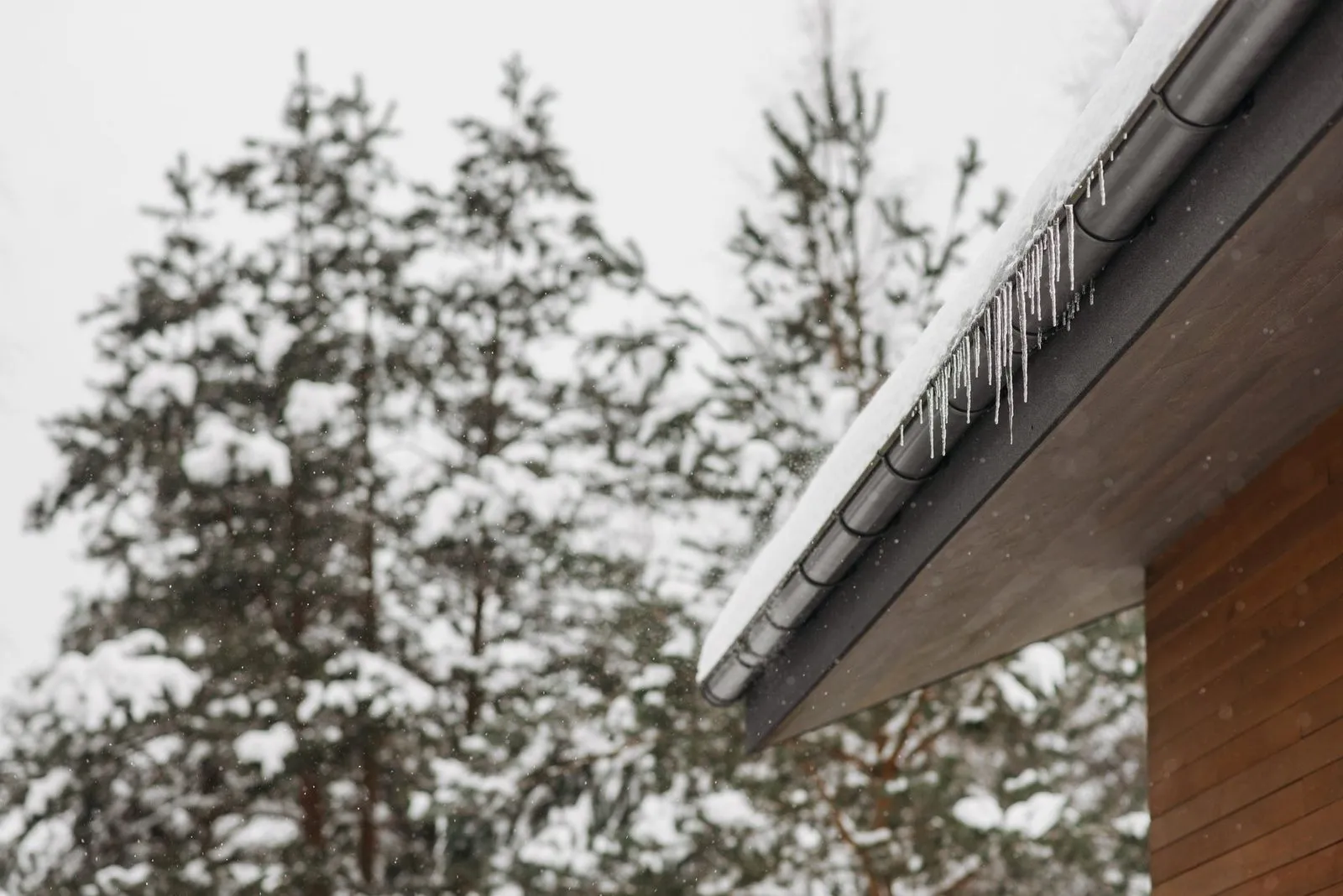
If you live in Vancouver or Camas, you probably go most winters without thinking about snow on your roof. Then a cold snap arrives, a few inches stick, and someone notices icicles lined up along the gutter. A neighbor mentions ice dams, and suddenly you’re wondering whether to worry.
The honest answer is that ice dams are uncommon here, and most Clark County roofs will never have one. But they do happen, especially on higher ground and on homes that leak heat into the attic. It helps to know how they work before the weather turns.
What Is an Ice Dam?
An ice dam is a ridge of ice that builds up along the lower edge of a roof. It forms in a simple sequence. Heat from the house warms the roof deck, the snow on the upper roof melts, and the water runs downhill. At the eave, where the roof overhangs the wall and stays cold, the water refreezes. Over days, that frozen edge grows and traps more meltwater behind it.
Once water has nowhere to go, it can back up under the shingles. Shingles are designed to shed water running downhill, not to hold back a pool. That’s how an ice dam turns into a ceiling stain.
Why Ice Dams Are Less Common in Clark County
Our winters are mostly wet instead of cold. Snow here tends to arrive in short events and melt off within a day or two, which doesn’t give an ice dam time to build. A dam needs sustained cold at the eave and a steady supply of melting snow above it.
That doesn’t make it impossible. A long cold snap with snow on the ground can produce the right conditions, and some years we get one. The homes most at risk are those at higher elevations and in more exposed spots. If you’re in Amboy or Yacolt, where snow tends to linger longer than in the lowlands, it’s worth paying more attention.
What Really Causes Them: Heat Escaping Into the Attic
The snow itself isn’t the cause. The cause is warm air getting into the attic and heating the underside of the roof deck. The usual sources are small and easy to overlook:
- Gaps around recessed lights, attic hatches, and bath fans that vent into the attic
- Thin or uneven insulation, especially along the edges
- Ducts running through the attic without insulation or sealing
- Poor ventilation, so warm air can’t leave and cold air can’t enter
The goal is a cold attic. When the roof deck stays near outdoor temperature, snow melts evenly from the sun and the air, not unevenly from the house.
How Ventilation Helps
Balanced attic ventilation, with air coming in at the soffits and leaving at the ridge, keeps the roof deck cold and carries away moisture. It also helps in our wet months, when humid air can condense in the attic. Our guide to roof and attic ventilation in the Pacific Northwest explains how the pieces work together and what to look for in your own attic.
Ventilation can’t make up for large air leaks from the living space, though. Sealing those leaks and adding insulation usually matters first, and a contractor who handles insulation or air sealing is the right person for that part.
Can Gutters Cause Ice Dams?
Gutters don’t cause ice dams, but they can make them worse. Clogged gutters hold water that freezes into a solid block, which gives the ice more to build on and adds weight to the fascia. A gutter full of frozen debris can pull away from the house.
Clearing your gutters before cold weather helps. We cover the timing and the steps in gutter cleaning before winter in Clark County. If you have gutters that already sag or leak at the seams, gutter repair and replacement is worth looking at before the cold arrives.
What to Do During a Cold Snap
If snow is on the roof and you see icicles forming, there are a few safe things you can do from the ground and from inside the house.
- Look at the ceilings and walls along the exterior for new stains, and check the attic if you can reach it safely.
- Photograph the roof edge, the icicles, and any interior stains, with dates.
- Keep gutters and downspouts clear from the ground, where you can reach them safely.
- Close the attic hatch tightly and make sure bath fans vent outside.
What to avoid matters just as much.
What Not to Do About Ice on Your Roof
Please don’t climb up to chip the ice away. A hammer or an ax can crush shingles and tear flashing, and the work happens on a slick surface where a fall is serious. Don’t use a pressure washer or an open flame, and don’t pour hot water on the roof, which can refreeze. Rock salt can also stain and corrode metal gutters and damage plants below.
If water is coming into the house, treat it like any leak. Contain it, document it, and call a roofer. Our guide on what to do when a roof leaks in heavy rain covers the same first steps, and they apply to ice-related leaks too.
How Much Snow Can a Roof Hold?
Most well-maintained homes handle a typical lowland snowfall without any structural worry. Wet, heavy snow that stacks up for days is a different story, especially on low-slope sections, flat porch roofs, and outbuildings with older framing.
If you see sagging, hear creaking, or find new cracks in drywall near a doorway after a heavy snow, stay out of that area and contact a professional. Rural properties with large outbuildings and carports around La Center deserve a look when snow is forecast.
Do Some Roofs Handle Snow Better?
Steeper roofs shed snow faster, and smooth metal roofing lets it slide off. That can be a benefit, though it also means snow can drop onto walkways and gutters. Our comparison of metal roof vs shingles in the Pacific Northwest covers how each handles our climate.
For shingle roofs, the underlayment matters. A roof replacement that includes ice and water shield in valleys and around penetrations adds protection where water is most likely to get in. We install it as part of every full replacement, and you can see what else goes into the job on our roofing page.
When to Call a Roofer
Call if you see water coming into the house, new stains along exterior walls, shingles that look lifted or damaged at the eave, or a gutter that has pulled away. We’ll inspect the roof, document what we find with photos and drone footage, and tell you whether it’s a repair or something more. The inspection is free, and we’ll be honest about whether the problem is the roof or the heat in your attic.
Is an Ice Dam Covered by Insurance?
Coverage depends on your policy and on what was damaged. Sudden water damage is often treated differently from long-term seepage. Read your policy, document the damage right away, and speak with your agent. Our post on whether insurance covers a roof replacement explains how roofers and insurers look at roof claims in general.