This comparison usually gets made with national numbers, and the national framing misses what actually matters in western Washington. Our roofs do not typically die of heat, UV or hail. They die of moisture and the organic growth that moisture supports.
That single fact reorders most of the metal-versus-asphalt argument.
The moss point, which is the Pacific Northwest point
Moss needs something to grip. An asphalt shingle is a granulated surface with a textured edge and overlapping courses, which is close to ideal. A standing seam metal panel is smooth, sheds water fast, and gives moss very little to hold.
Moss on an asphalt roof is not cosmetic. It holds water against the shingle, lifts the edges as it thickens, and works granules loose. On the north-facing slopes under fir canopy that describe half of Clark County, it is the single most common reason a roof reaches end of life early.
Metal does not make you immune - debris still collects in valleys, and lichen will find a scratched or weathered panel eventually - but it substantially reduces the mechanism. If your existing roof has a chronic moss problem and heavy overhead canopy, that is the strongest practical case for metal here.
Lifespan
Asphalt architectural shingles are commonly rated 25 to 50 years by the manufacturer. In this climate, on a shaded slope with imperfect attic ventilation, the realistic service life is shorter than the rating - we generally plan on the high teens to low twenties for a typical Clark County roof.
A properly installed standing seam metal roof is a multi-decade proposition, commonly quoted at 40 to 70 years, and the failure mode is usually the fastener and sealant details rather than the panel.
So the honest framing is not “metal lasts longer.” It is “metal is likely the last roof you install on that house, and asphalt is probably not.”
What is the biggest problem with metal roofs?
Cost is the obvious answer, but the more useful one is installation quality and complexity.
Metal is far less forgiving than asphalt. A shingle roof is thousands of small overlapping pieces and a mediocre installer produces a roof that works. Metal is long panels, engineered clips, and precise flashing at every penetration and transition, and a mediocre installer produces a roof that leaks or oil-cans visibly.
The second real problem is exposed-fastener panels, which is what most people picture when they picture cheap metal roofing. Those screws pass through the panel into the deck with a rubber washer, and the washers degrade. Twenty years in, you have a roof with hundreds of fasteners that need attention. Standing seam hides its fasteners under the seam, which is why it costs more and why it is what belongs on a house.
Third: repairs and modifications are harder. Adding a skylight to a metal roof later, or repairing a section, is a bigger job than the same work on asphalt.
When should you not use a metal roof?
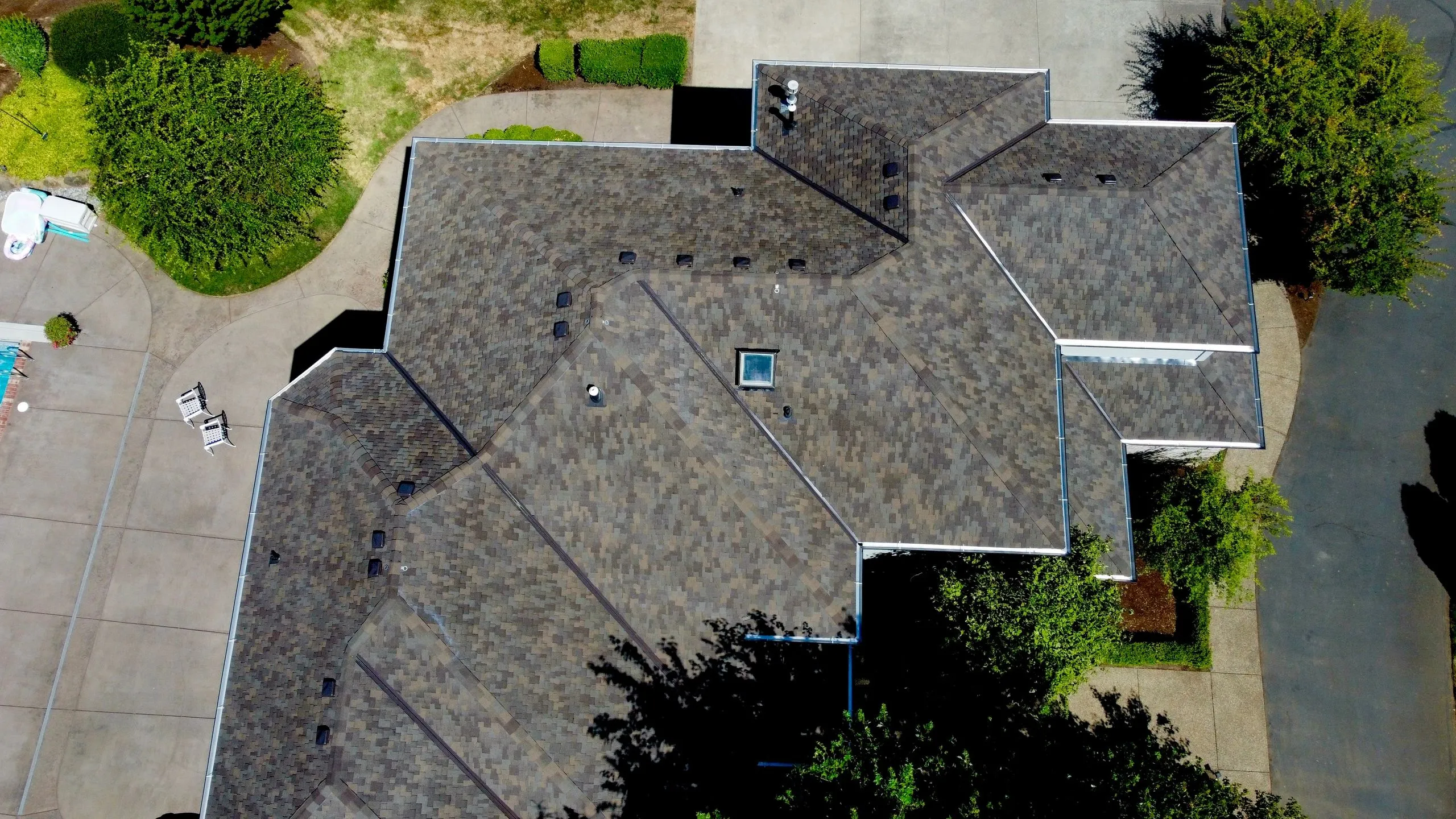
- Complex roof geometry. Lots of hips, valleys, dormers and penetrations mean lots of custom flashing, and the cost premium climbs steeply. A simple gable is metal’s best case.
- A short holding period. If you are selling in three years, you will not recover the premium.
- HOA or architectural restrictions. Some Clark County subdivisions restrict roofing appearance. Check before you fall in love with it.
- Budget pressure with an urgent leak. A good asphalt roof installed now beats a metal roof you cannot quite afford.
- Matching an existing roof section. Partial metal on a house that is otherwise composition rarely looks intentional.
Does homeowners insurance go down with a metal roof?
Sometimes, and less than people hope in this region.
Carriers commonly offer premium credits for impact-resistant roofing, and those discounts are most meaningful in hail-prone states. Western Washington is not a major hail market, so the credit here tends to be smaller or absent.
Where metal does help with insurance in the Pacific Northwest is indirect: a roof that does not grow moss is a roof that does not attract the moss-related non-renewal notices carriers have been issuing. That is a real benefit and it does not show up as a line-item discount.
Ask your agent for a specific quote both ways before counting on any savings. It varies by carrier more than by roof.
How much is 1000 sq ft of metal roofing?
We do not publish rates, for the same reason we do not on roof replacement cost: the spread is wide enough that a headline figure misleads more readers than it helps.
What is reliable is the relationship. Standing seam metal typically runs a substantial multiple of an architectural asphalt roof on the same house, driven by material, by the skill premium on installation, and by custom flashing at every transition. Exposed-fastener corrugated is much cheaper than standing seam and is not the same product.
Two things that move a metal quote more than square footage: the number of penetrations, and the roof’s geometry. A thousand square feet of simple gable and a thousand square feet with two dormers, a chimney and three plumbing stacks are very different jobs.
Noise, which is mostly a myth
The rain-on-a-tin-roof objection comes from barns and sheds, where metal is fastened to open purlins with nothing underneath. A residential metal roof sits over solid decking, underlayment and an insulated attic. In practice, homeowners report it as comparable to asphalt, and some find it quieter because the assembly is denser.
Snow, which matters in the foothills
Metal sheds snow, in sheets, without warning. On the higher-elevation properties around Yacolt and Amboy that is worth designing for - snow guards above doorways, walkways and parking, or a roof orientation that dumps somewhere harmless.
The practical recommendation
If your house has a straightforward roof, you plan to stay, and moss is a recurring fight, metal is a genuinely good decision here and the moss argument alone can justify it.
If your roof is complicated, your budget is defined, or you might move, a quality architectural asphalt shingle with proper attic ventilation and a real moss maintenance habit will serve you well and cost much less. Most Clark County homes end up here, and it is not a compromise.
We install both on roof replacements. If you want an honest read on which your specific roof suits, we do free inspections with drone documentation across Clark County.