

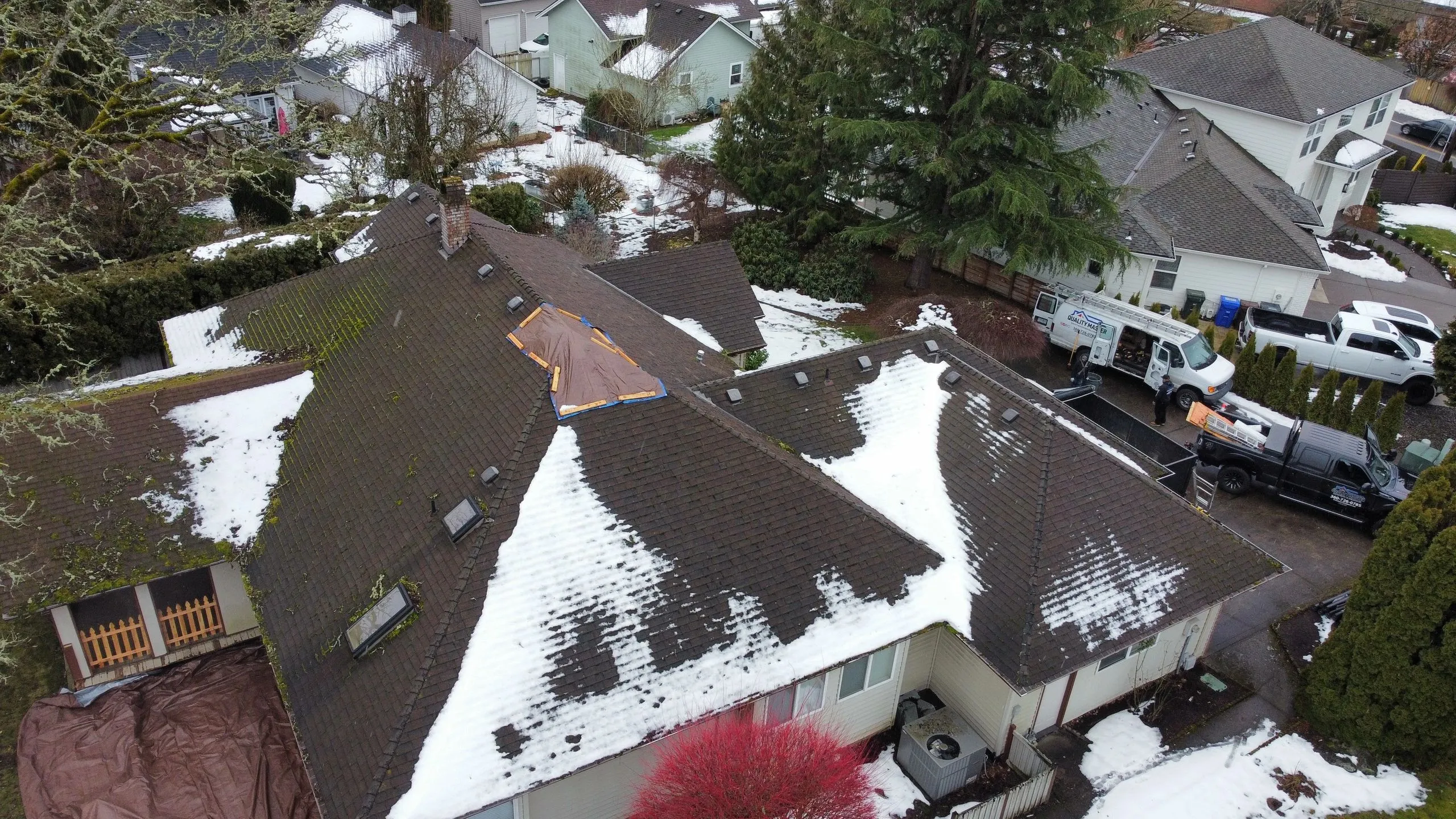
Insurance covers sudden damage, not gradual decline. A limb through the roof in a January windstorm is a claim. A twenty-year-old roof with curling shingles and moss on the north slope is maintenance, and no carrier in the country pays for that.
Most of the disappointment around roof claims comes from not knowing which side of that line a particular roof is on.
What is generally covered
Standard homeowners policies cover the roof under the dwelling section for sudden, accidental perils. In Clark County that overwhelmingly means wind, and the Gorge outflow that funnels through Washougal and Camas produces more of these claims than anywhere else in the county.
- Wind lifting or tearing off shingles
- A tree or large limb coming down on the roof
- Impact damage from debris during a storm
- Hail, which we get less of here than the Midwest but do get
- Water damage inside the house caused by a covered roof failure
What is generally not covered
- Age and normal wear. A roof at end of life is a maintenance expense.
- Moss and algae damage. This is the big one in the Pacific Northwest.
- Deferred maintenance. If a small leak was known and ignored until the decking rotted, carriers deny the rot.
- Poor original installation. That is a contractor dispute, not an insurance claim.
- Cosmetic granule loss without a storm event behind it
Moss deserves its own note because it is so common here. Carriers treat moss damage as a failure to maintain, and increasingly they are proactive about it. Insurers have been known to review aerial imagery of neighborhoods and flag or non-renew policies over visible roof moss. Keeping moss off the roof is partly an insurance-preservation activity. We cover the how in getting rid of moss on a roof in the PNW.
ACV versus replacement cost is the detail that decides your settlement
This is the single most important line in your policy and most homeowners have never looked at it.
Replacement cost value (RCV) pays what it costs to replace the roof today. Typically the carrier releases the depreciated amount first and the remaining recoverable depreciation after the work is complete and invoiced.
Actual cash value (ACV) pays replacement cost minus depreciation, and you absorb the depreciation. On a fifteen-year-old roof that can be a very large share of the total.
Some policies also carry a separate wind or hail deductible, often a percentage of the dwelling coverage rather than a flat figure, which can be considerably higher than your standard deductible.
Read the declarations page before you file. If you are on ACV with a percentage wind deductible on an older roof, a claim may return less than you expect.
How a claim actually goes
- Document before anything is touched. Photos from the ground, photos of interior damage, the date and the weather event. If you have to tarp to prevent further damage, do it, and photograph it first - carriers expect you to mitigate, and they also expect proof of the original condition.
- File promptly. Policies carry notice requirements and late filing is a denial reason.
- Get an independent inspection. A roofer on the roof sees things a ground-level assessment does not. We do this at no cost and document with drone photography.
- The adjuster inspects. You are entitled to have your contractor present. It is worth arranging, because scope disagreements get resolved faster with both parties looking at the same slope.
- Compare the adjuster’s scope to reality. Adjuster estimates sometimes omit items that code or manufacturer instructions require. That is a supplement, and it is a normal part of the process rather than a fight.
- The work is done and invoiced, and on an RCV policy the recoverable depreciation is released.
The storm-chaser problem
After every significant Clark County windstorm, out-of-area crews appear canvassing neighborhoods. Some are legitimate. Many are not, and the pattern is consistent: an unsolicited door knock, an offer to “handle the insurance,” pressure to sign something immediately, and a request for the insurance check to be signed over.
Two protections. First, verify the license. Any Washington contractor’s license, bond and insurance status is public through the Washington State Department of Labor & Industries contractor lookup, and it takes a minute. Second, be wary of anyone offering to cover your deductible - that is insurance fraud in Washington, and it makes you a participant.
Our existing guide on storm damage roof repair in Clark County goes through the immediate steps after a windstorm in more detail.
If the claim is denied
A denial for wear and age on an old roof is usually correct, and at that point the question becomes replacement on your own terms rather than an appeal. That is a different conversation about timing, material and financing.
A denial you believe is wrong can be appealed, and an independent inspection report with photographs is the substance of that appeal.
What we do
We inspect at no cost, document with photographs and drone imagery, meet the adjuster on site, and write the roof repair or replacement scope so it reflects what the roof actually needs. We do not sign your check, we do not cover deductibles, and we will tell you honestly when we think the damage is age rather than the storm - because a claim that should not have been filed can still count against you.