If you’re a Vancouver, WA homeowner planning a siding replacement, the choice usually comes down to James Hardie fiber cement vs. vinyl. Both are common in Clark County, both are sold by every supplier in town, and the cost difference is significant. Here’s the honest comparison from Quality Master Roofing & Remodel - a James Hardie certified installer who also does plenty of vinyl work when it’s the right call.
Lifespan in PNW conditions
James Hardie fiber cement: 30-50 years with proper installation. The material itself is essentially permanent - it doesn’t rot, doesn’t burn, and doesn’t get eaten by insects. It can fade or chalk over 20-25 years, at which point a repaint refreshes it for another decade or two.
Vinyl siding: 20-30 years in PNW conditions, and it is what most of the 1980s and 1990s tract housing in Orchards and Salmon Creek still wears. The vinyl itself holds up fine; what fails first is usually the color (UV fade), the impact resistance (cold makes vinyl brittle and easy to crack), and the trim around windows and doors where water sneaks in.
Cost - Hardie runs 50-100% more than vinyl
For a typical 2,500 sq ft Clark County home, full siding replacement runs approximately:
-
Vinyl siding: $14,000–$22,000 installed (material grade dependent)
-
James Hardie fiber cement: $22,000–$38,000 installed
The price gap closes when you factor in the eventual second siding job 20 years later. If you’re in your forever home, Hardie wins on lifetime cost. If you might move in 5-7 years, vinyl is the more rational call.
Fire rating: Hardie is non-combustible
Fiber cement is rated non-combustible - it won’t ignite, won’t carry flame, and won’t drip molten plastic. Vinyl siding is combustible, melts at relatively low temperatures, and can drop the underlying wall structure’s overall fire rating. With increasing wildfire awareness in the PNW and rising insurance premiums for homes with vinyl siding in higher-risk areas, this matters more every year.
It is the argument that usually settles the decision on lots backing standing timber. On Hardie siding for Camas homes along the Lacamas greenbelt, owners have generally worked this out before we arrive.
Moisture and the PNW climate
This is where Hardie really separates from vinyl. Fiber cement is dimensionally stable - it doesn’t swell, shrink, or warp with humidity. Vinyl moves with temperature: in a hot Clark County summer it expands, and in winter it contracts. That motion is why vinyl is installed loose at the seams - and why those seams sometimes pop, sag, or rattle.
Hardie also accepts paint and caulking the way wood does. When a piece gets damaged, you can replace one plank and have it look right. Vinyl is much harder to color-match after a repair, especially if the existing siding has faded.
Persistent damp is where the gap widens most. A wall that never dries between rains is a durability question for wood and engineered products in a way it is not for fiber cement, which is why we lean toward it on shaded La Center properties under mature fir and maple.
Look and resale value
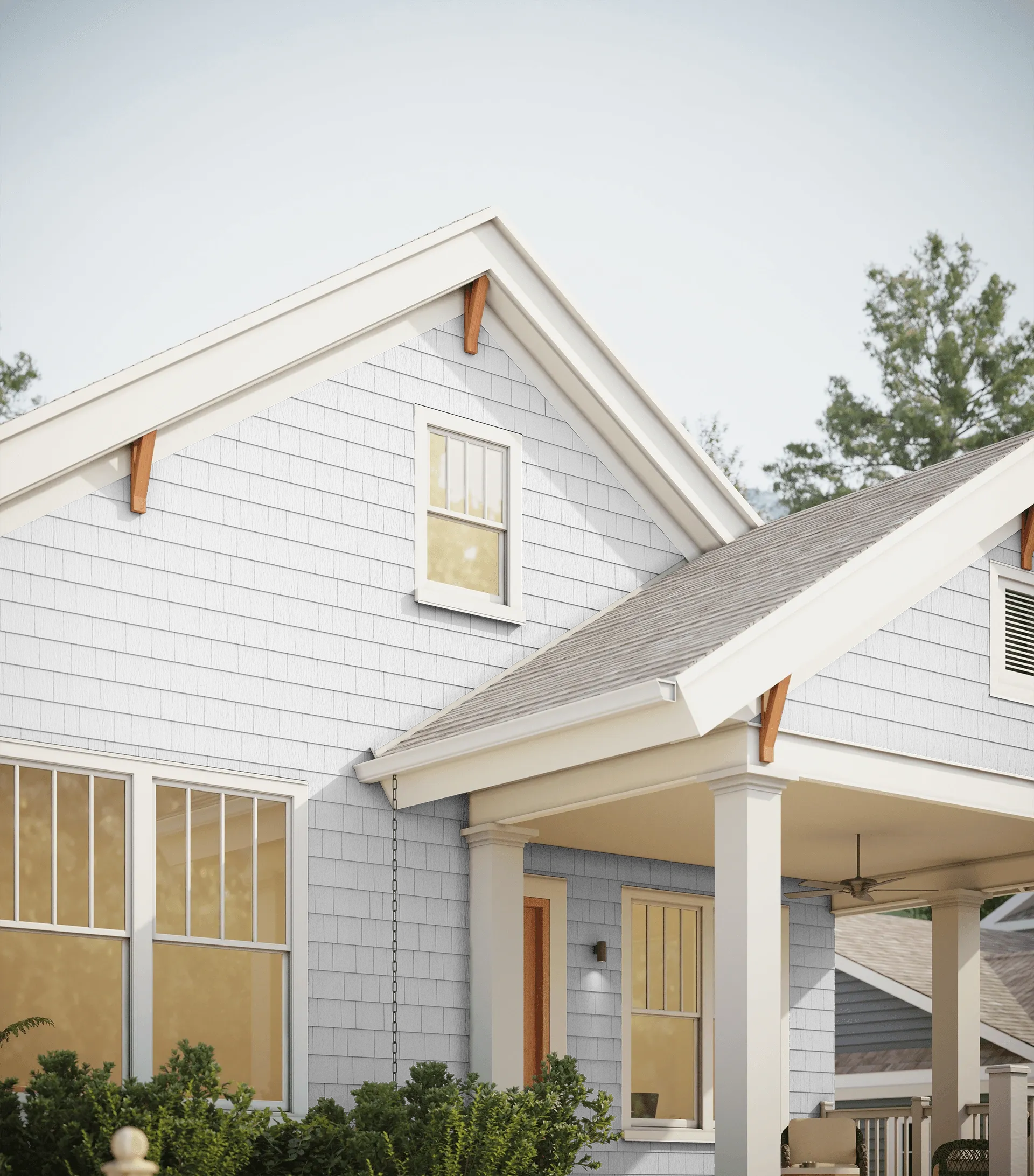
From the curb, modern vinyl looks fine - much better than the vinyl of 20 years ago. Up close and on certain architectures, the look is unmistakably vinyl: shallower shadow lines, plasticky texture, visible nailing flanges. Hardie reads as painted wood from any distance, and the thicker board profile gives the shadow line depth that vinyl can’t match.
Realtor data in Clark County, WA shows Hardie-sided homes generally sell faster and for slightly higher prices than vinyl-sided comparable homes. The gap isn’t huge, but it’s real, and it matters if you plan to sell.
The certified installer factor
James Hardie’s full 30-year material warranty only stays intact when the siding is installed by a Hardie-certified contractor following Hardie’s specific blind-nailing, gapping, and flashing requirements. There’s a real performance difference between a Hardie job done to spec and a Hardie job done by a generic siding crew - the manufacturer-spec install is what unlocks the long warranty and the long life.
Quality Master Roofing & Remodel is a James Hardie certified installer in Vancouver, WA. That certification covers HardiePlank lap siding, HardieShingle (the shake-look profile), HardieTrim corner boards and window surrounds, and the manufacturer-spec underlayment system. We follow Hardie’s spec because cutting corners voids the homeowner’s warranty.
When vinyl is the right call
We install vinyl plenty of times when it’s the right material for the project. Vinyl makes sense when:
-
The homeowner is selling in the next few years and wants the look without the investment
-
The home is a rental or investment property where lifetime cost is less of a concern
-
The budget is fixed and vinyl is the path to a complete envelope upgrade today vs. a partial Hardie job
-
The architecture is simple enough that vinyl looks great (single-story ranches, smaller homes)
What we’d do on your house
If you call Quality Master for a free estimate, we’ll look at the home, the lot, and your timeline. For most Clark County customers planning to stay 10+ years, we recommend Hardie. For shorter holds or tighter budgets, we’ll quote vinyl too, write you a clear side-by-side comparison, and let you make the call. No pressure on the more expensive option.
Free siding comparison estimate
Want both options costed for your specific home? Quality Master Roofing & Remodel is a James Hardie certified siding contractor and provides free side-by-side siding estimates throughout Clark County, WA - Vancouver, Camas, Washougal, Battle Ground, Ridgefield, La Center, and all of Clark County.