

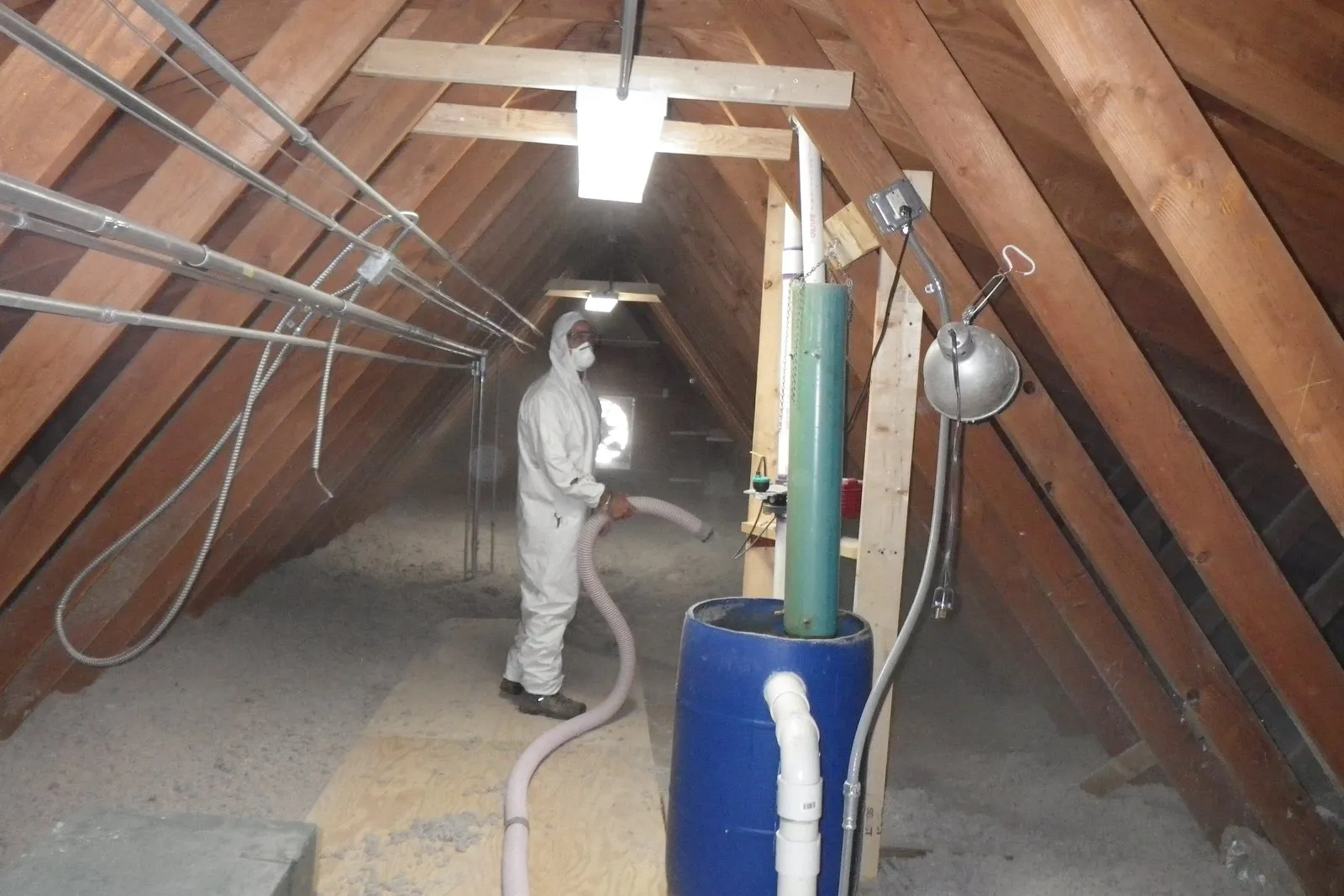
You climb into the attic on a cold January morning and the underside of the roof deck is white with frost. By afternoon it is dripping. Nothing has rained for two days, but the insulation is damp and there is a stain on the bedroom ceiling.
That is a common winter scare, and it is often not the roof at all.
What Attic Condensation in Winter Looks Like
Warm indoor air carries moisture. When it reaches a roof deck that is close to outdoor temperature, the moisture turns to frost on a freezing night and to water when the day warms up.
The signs are consistent:
- Frost or beads of water on the underside of the roof sheathing
- Rusty or frosted nail tips poking through the deck
- Matted or damp insulation
- Dark staining on the sheathing that spreads over a wide area
Condensation or Roof Leak?
Timing and location usually tell the story. A roof leak follows rain and tends to appear near a penetration, such as a chimney, a vent pipe, or a skylight. Condensation follows cold nights and spreads across a broad part of the deck, often near bath fans or the attic hatch.
Not every case is clear. A roof can leak and have a condensation problem at the same time. If you are unsure, our posts on where roof leaks actually start and what to do when a roof leaks in heavy rain describe what a real leak looks like.
Where the Moisture Comes From
Showers, cooking, laundry, and breathing all put moisture in the air. It reaches the attic through gaps: the hatch, recessed lights, plumbing and wire penetrations, and ducts.
Bath fans are a common source. A fan that discharges into the attic instead of outdoors sends the wettest air in the house straight at the roof deck. We cover this in roof and attic ventilation in Pacific Northwest homes.
Older homes in Minnehaha and Hazel Dell often have more gaps than newer construction, and some have soffits that were never vented.
What Helps
ENERGY STAR explains that proper insulation and air sealing keep attics cold in winter by blocking the entry of heat and moist air from below. The same page tells homeowners never to cover attic soffit vents with insulation and to use rafter vents to keep airflow open.
In practice that means:
- Seal the gaps around the hatch, lights, and penetrations before adding insulation.
- Run every bath fan and dryer duct all the way outdoors.
- Keep soffit vents clear, with baffles at each rafter bay.
- Balance intake at the eaves with exhaust at the ridge.
Our roofing service includes ventilation work with a replacement: continuous ridge vents, soffit intake checks, and balanced ventilation sized to the attic. During a tear-off the deck and the attic are open, which makes it the easiest time to fix.
Why It Matters for the Roof
Moisture that sits against the deck can stain the sheathing and, over time, soften it. The ARMA notes that ventilation helps prolong the service life of the roof. A cold, dry attic also helps with ice at the eaves, which we cover in ice dams and snow on Clark County roofs.
When to Call a Roofer
Call if stains keep returning, the insulation stays wet for days, the deck feels soft, or you smell mustiness in the attic. We inspect the roof, check the attic, and tell you whether you have a roof problem, a ventilation problem, or both.
Three Checks Before the Next Cold Snap
You do not need to enter the attic for these. Look at the roof for the vent hoods that serve your bath fans. Run the fans and confirm air is leaving the house through them. Then look up at the soffit under the eaves for paint-clogged openings.
If any of those turns up a problem, you have found a likely source before the first frost.