

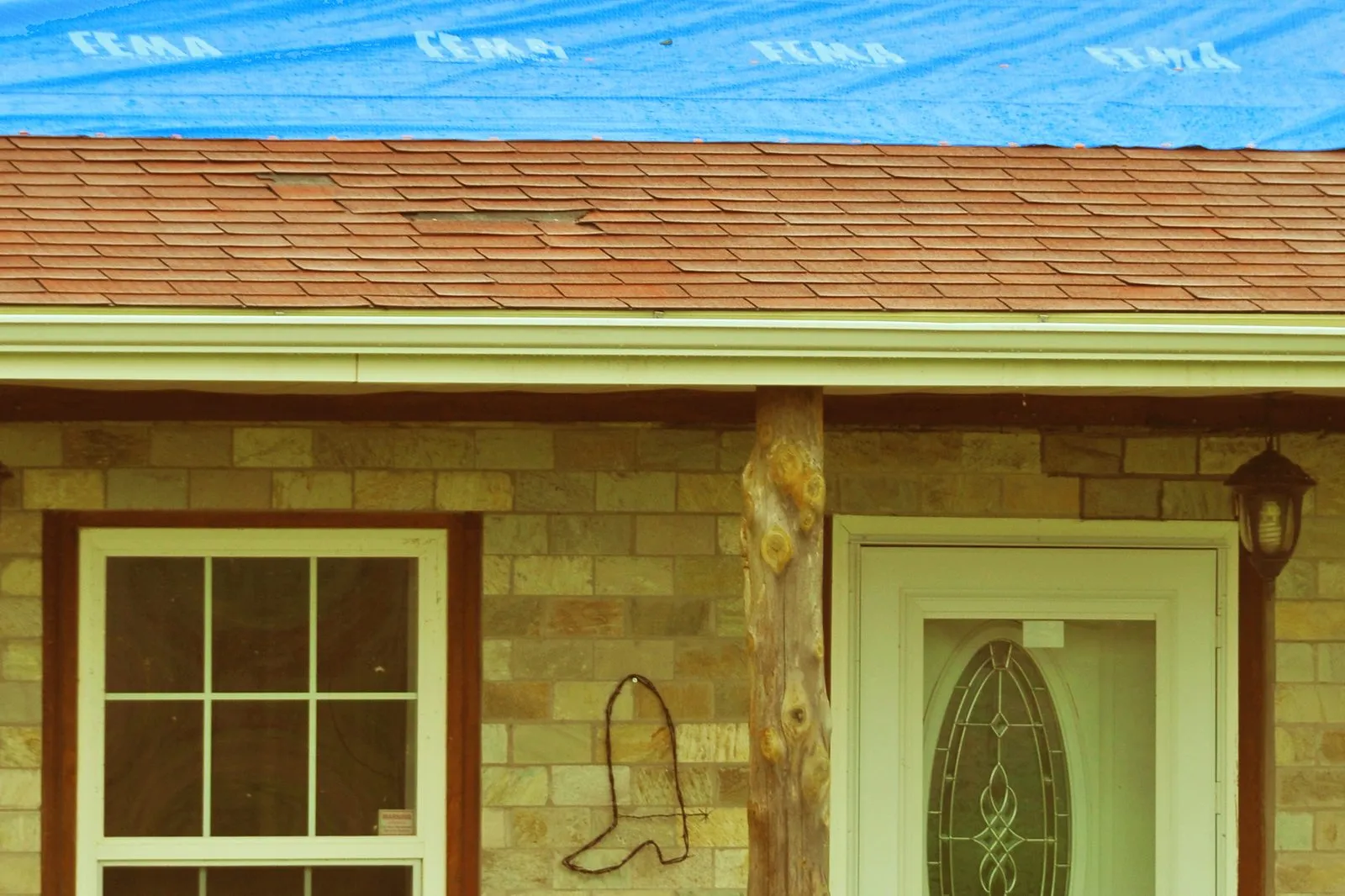
After a windstorm, most people walk the yard before they look up. A few pieces of shingle on the lawn, a gap along the ridge, or a tab hanging at the edge is usually enough to tell you the wind found something.
What you see from the ground is only part of the picture. Some wind damage is obvious, and some of it is quiet.
How to Spot Wind Damaged Shingles From the Ground
Stay on the ground and use binoculars or a phone zoom. Look for three things:
- Missing shingles. Gaps where the roof color changes, darker underlayment showing, or shingle pieces in the yard.
- Creased shingles. A horizontal line across a tab where it was bent back and folded.
- Lifted or curled edges. Tabs that no longer lie flat against the row below.
Take photos from several angles and keep the date. If you can see any damage, do not climb up to check. Roofs are slick in our wet season, and the ladder is the dangerous part.
Why Shingles Lift in the Wind
Asphalt shingles resist wind in two ways: nails, and a strip of adhesive on each shingle. The Asphalt Roofing Manufacturers Association explains that factory-applied sealant strips enhance wind resistance, and that the sealant adheres shingles together after installation.
When that seal breaks, a tab can flap in the next gust. A creased tab has usually lost its grip for good.
Moss can start the process before the storm arrives. The ARMA says moss can lift or curl shingles and increase the risk of blow-off. Our post on removing roof moss in the Pacific Northwest covers the prevention side.
What a Wind Rating Means
Shingles are tested for wind resistance. The ARMA describes two methods: ASTM D7158, where Class H is the highest rating, and ASTM D3161, where Class F is the highest.
On our roofing page, standard architectural shingles carry a 110 mph rating. Our heavy-duty wind-rated lines carry 130 mph, which is the line we recommend for exposed hillside and Gorge-corridor homes. Homes in Washougal and Camas see strong wind exposure, so that is where the heavier line earns its keep.
Repair or Replace After Wind Damage
Wind repair is often small. The ARMA lists resealing shingles damaged by high winds and replacing shingles damaged by windborne debris as common quick repairs. A roof that is 20 years old with curling edges across a whole slope is a different case, because the next storm will find the same weakness.
We handle wind damage under our roof leak repair service, and we will tell you plainly when a repair is the right call. Color matching can be a factor, and the same ARMA page notes that new shingles may look different at first because they have not aged like the rest of the roof.
Insurance and Wind Damage
The Washington Office of the Insurance Commissioner lists wind among the causes that homeowners insurance usually covers. Your policy and deductible decide what happens in your case. Our guide to what to do after a Clark County windstorm walks through documentation and adjusters.
Skip the Roofing Cement
A tube of roofing cement and a free afternoon is a tempting fix. The ARMA warns that temporary fixes such as roofing cement on a punctured shingle are not suitable long-term repairs.
If water is getting in before a roofer can come, ask about a tarp instead. We cover that in emergency roof tarps in Vancouver, WA.