Roof replacement has a reputation as a summer job. Most people picture a crew on a dry, sunny roof in July. But in Clark County, the dry season is short, the wet season is long, and a roof doesn’t always wait for a convenient month to fail. If your roof is leaking or showing its age, you may be wondering whether replacing it now is a bad idea.
It usually isn’t. Here is how a careful crew handles rain, what to ask when you get estimates, and the cases where waiting a week or two is the better call.
Can You Replace a Roof When It Rains?
Yes, with limits. A roof replacement can happen in the fall and winter in the Pacific Northwest, but the crew doesn’t tear off shingles in a downpour. The work is planned around the forecast. On a wet day, the crew may hold off, shift to a prep task, or stop partway and secure the roof.
The trick isn’t avoiding rain altogether, because that’s impossible here. It’s making sure the house is never left open to it.
How a Crew Plans Around the Forecast
A reputable roofer watches the weather for several days and schedules the tear-off for a window that fits the job. A typical single-family home takes one to three days, so a stretch of two dry days is often enough to get a roof dried in. Our roofing process is built around that rhythm, and our crews will move a start date a day or two rather than take a chance on a soaked deck.
Expect your roofer to call and reschedule. That’s a good sign, not a problem. A contractor who never shifts the date in November is probably taking risks with your house.
Tearing Off Only What Can Be Covered
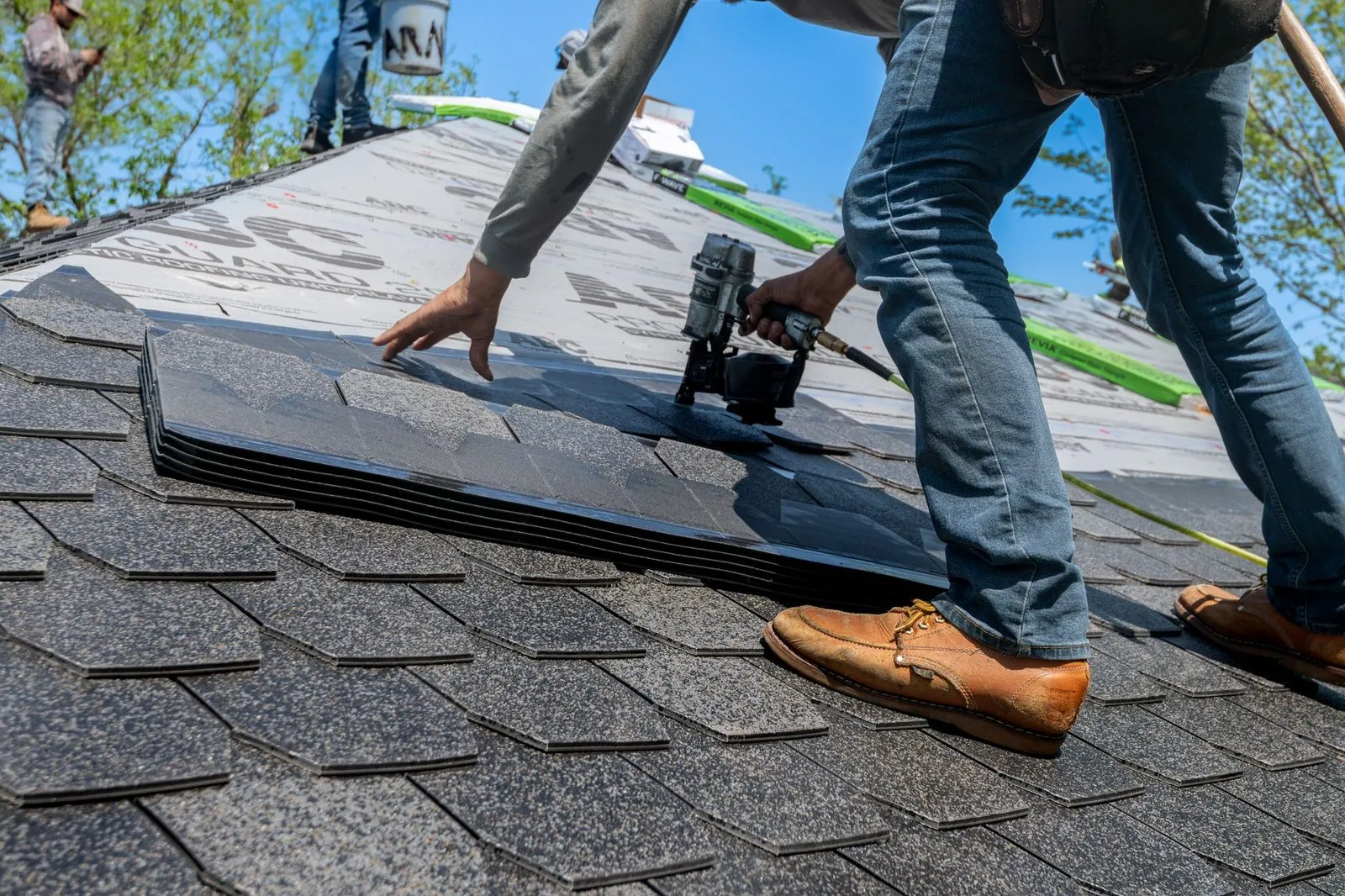
The most important habit is working in sections. The crew removes old roofing in an area it can dry in with new underlayment the same day. Whatever is open at the end of the day is covered, and nothing is left bare overnight.
This is where underlayment earns its keep. Once the old shingles are off and the deck is inspected, a synthetic underlayment goes down and holds back water while the shingles follow. Ice and water shield goes into valleys and around penetrations where leaks tend to begin. Our guide on where roof leaks start at the flashing explains why those spots get the extra layer.
What About Wet Wood?
Rain on plywood or OSB decking is a concern, but a short wetting isn’t automatically a problem. The crew inspects the deck during tear-off and replaces any soft or damaged panels. Damp but sound decking can usually be covered once the surface has a chance to dry, depending on conditions.
If the deck has been wet for days, or you can see swelling or rot, it needs replacement instead of covering. Ask your roofer how they handle the deck, and ask that deck replacement be priced as a clear line in the estimate.
Tarps and Temporary Protection
A tarp is the backup plan. If rain moves in before the roof is finished, the crew secures a tarp over the open area and anchors it properly so wind can’t lift it. We tarp the property during replacements, and tarp service is also available while a claim or financing is worked out.
If a storm already damaged your roof and you’re waiting on an adjuster, see our post on storm damage roof repair in Clark County. Tarping the roof in the meantime protects the house and supports your claim.
Shingles and Cold Weather
Asphalt shingles have a sealant strip that bonds the courses together, and it activates with warmth. In cold weather that bond can be slow. Most Vancouver winter days are mild enough for this to work, but on a cold morning the crew may need to wait for the day to warm, or hand-seal shingles. Cold-weather installs call for shingles rated to seal at lower temperatures and extra attention to nailing.
This is another reason to ask your roofer how they handle cold and wind. Fastener placement matters in winter, since the shingles may not seal right away. For homes on exposed ground, like Washougal and the Gorge edge, the nailing pattern is worth a direct question.
When It Makes Sense to Wait
Some situations do favor a short delay:
- A storm is forecast to stay for several days with no break in the radar
- High winds are expected, which makes loose materials and tarps dangerous
- The roof isn’t leaking, you’re simply planning ahead, and spring is close
- You want a specific material that’s on back order
And some favor going now:
- The roof is actively leaking or has a known failed section
- Shingles are missing, curling, or shedding granules heavily
- You’ve had storm damage and a claim is approved
- You’ve noticed soft spots, sagging, or daylight in the attic
Waiting through a wet season with a failing roof tends to cost more than replacing it. Water keeps working into the insulation and framing. Our post on when to replace a roof in the Pacific Northwest lists the signs that point to replacement instead of repair.
Is the Price Different in Winter?
It can be, but not for a reason you should assume. Schedules can open up in the slower season, and some contractors can start sooner. Weather delays can also add days. Rather than guess, ask for the scope in writing and ask how weather days are handled. That keeps expectations clear on both sides. Our guide to roof replacement cost in Vancouver, WA explains what moves a quote.
Preparing Your Home for a Winter Re-Roof
A little preparation helps the day go smoothly. Move vehicles out of the driveway, clear the area around the house, and take down fragile items from walls, since hammering can shake them loose. If you have an attic, cover stored belongings. Our checklist for preparing your home for roof replacement day covers it in more detail.
If your project needs a permit, the crew handles it, and the city or county inspects as needed. Our guide to roof permits in Clark County explains the process.
Local Differences Across Clark County
Rain doesn’t fall evenly across the county. Homes in Ridgefield and Orchards, many built in the past few decades and approaching a first re-roof, have a lot of options and usually good access, which makes scheduling simpler. Steeper hillside roofs take longer and are more weather-sensitive, so crews watch the forecast even more closely.
How Do I Get a Winter Re-Roof Started?
Start with a free inspection. We’ll walk the roof, document it with photos and drone footage, and send you a written estimate. We’ll also tell you honestly whether your roof needs to be replaced now or can safely wait. You can contact Quality Master Roofing & Remodel to set up a visit.